Click on days below to jump event details.
Saturday Midday & Evening, August 1
Sunday Morning, August 2
All events are à la carte, build your own adventure in the Black Belt! Our events are beginner-friendly, and we encourage everyone to join us, whether you’re new to birding or a seasoned enthusiast. When planning your birding adventure, please incorporate drive time between locations and use the Google Map below.
*Please note, final meeting locations will be sent to registered attendees before the festival in an information packet PDF.
Friday July 31, Evening
Kick Off Party
Click + to read event descriptions
-
Join us in the Ballroom at Project Horseshoe Farm, a community health organization located in the historic Greensboro Hotel, for a FREE kick-off party to celebrate the beginning of our festival! With live music by __________ in the courtyard, and a vendor expo from our partners in conservation and more! Scot Duncan, ALAudubon’s Executive Director, will welcome attendees with a short speech at 6:15 pm, and guests are encouraged to meet and mingle and then explore Greensboro’s eclectic dining options!
Address: Project Horseshoe Farm, 1202 Main St, Greensboro, AL 36744
Saturday August 1,
Morning Events
Click + to read event descriptions
-
Join Selma native Terry Chestnut for a guided bird walk through downtown Selma and across the historic Edmund Pettus Bridge, site of the pivotal Selma to Montgomery marches and Bloody Sunday. Terry, whose father J. L. Chestnut Jr.represented Martin Luther King Jr., will share personal stories from this historic landscape. As we walk, we’ll look for birds along the river and in the canopy, with possible sightings including Cliff Swallow, Osprey, and several vireo species.
Note: Selma is about a 45-minute drive from Joe Farm.
16 Spots // $35.00
Address: Selma downtown
-
Explore one of Alabama’s most bird-rich stretches of road on this guided car-caravan tour along County Road 9. Designed for birding primarily from the vehicle with occasional short stops, we’ll pass catfish ponds, pastures, hedgerows, forest edge, and creek bottoms.
Open fields may host Dickcissel, Indigo Bunting, Blue Grosbeak, and Eastern Meadowlark, while luck could bring views of a Painted Bunting or Scissor-tailed Flycatcher. Catfish ponds often attract Wood Stork, herons, and multiple egret species, with occasional sightings of Bald Eagle and Loggerhead Shrike.
12 Spots // $35.00
Address: Intersection of County Rd. 9 and Co. Rd. 10, Hale Co.
-
Lakeland Farms is an iconic collection of pastures and large ponds with the accompanying hedgerows, wetlands, and forest patches that make the western Black Belt so birdy. Your guides will lead the car caravan to sites along the best rural roads of this eBird hotspot. Possibilities include Indigo Bunting, Loggerhead Shrike, Eastern Meadowlark, Eastern Kingbird, plus herons, egrets, raptors, and swallows.
12 Spots // $35.00
Address: Intersection of Lakeland Farm Rd. and Co. Rd. 20, Perry County
-
Join us for a guided tour of Lake Livingston and the prairie restoration site at the University of West Alabama. The 54-acre lake attracts wading birds and swallows, while nearby woodlands provide habitat for woodpeckers, flycatchers, and tanagers.
Along the prairie trail—featuring both remnant and restored grasslands—we’ll watch for raptors such as Red-shouldered Hawk, Red-tailed Hawk, and Mississippi Kite, as well as grassland species like Yellow-breasted Chat, buntings, and grosbeaks.
16 Spots // $35.00
Address: 100 Lake Drive UWA, Livingston AL 35470
-
One of the most popular birding sites in the Black Belt, Perry Lakes Park is a mix of bottomland forest, oxbow lakes, and swamp. A highlight is the restored fire tower, built by Auburn University’s Rural Studio, a design-build architecture program, where birders can see eye-to-eye with birds in the canopy. Species we may see on this guided hike include Bald Eagle, Wood Duck, Yellow-billed Cuckoo, Little Blue Heron, Northern Parula, Barred Owl, Red-eyed Vireo, and Summer Tanager.
16 Spots // $40.00
Address: AL 175 Marion AL, 36756
-
One of the birdiest sites in the Black Belt, this site offers a mix of wetlands, prairie, and forest. Species we may see on this guided tour include Wood Stork, Anhinga, Blue-winged Teal, White Ibis, several heron and egret species, Indigo and Painted Buntings, Blue Grosbeaks, Common Gallinules, American Kestrel (southeastern race), Eastern Kingbird, Loggerhead Shrike, Yellow Warbler, and Dickcissel. This is the best location for an unexpected species, including early migrant shorebirds, ducks, and terns. This tour will explore the eastern portions of this expansive property.
12 Spots // $45.00Address: 1132 Co. Rd. 73, Greensboro, AL 36744
-
One of the birdiest sites in the Black Belt, this site offers a mix of wetlands, prairie, and forest. Species we may see on this guided tour include Wood Stork, Anhinga, Blue-winged Teal, White Ibis, several heron and egret species, Indigo and Painted Buntings, Blue Grosbeaks, Common Gallinules, American Kestrel (southeastern race), Eastern Kingbird, Loggerhead Shrike, Yellow Warbler, and Dickcissel. This is the best location for an unexpected species including early migrant shorebirds, ducks, and terns. This tour will explore the western portions of this expansive property.
12 Spots // $45.00
Address: 1132 Co. Rd. 73, Greensboro, AL 36744
-
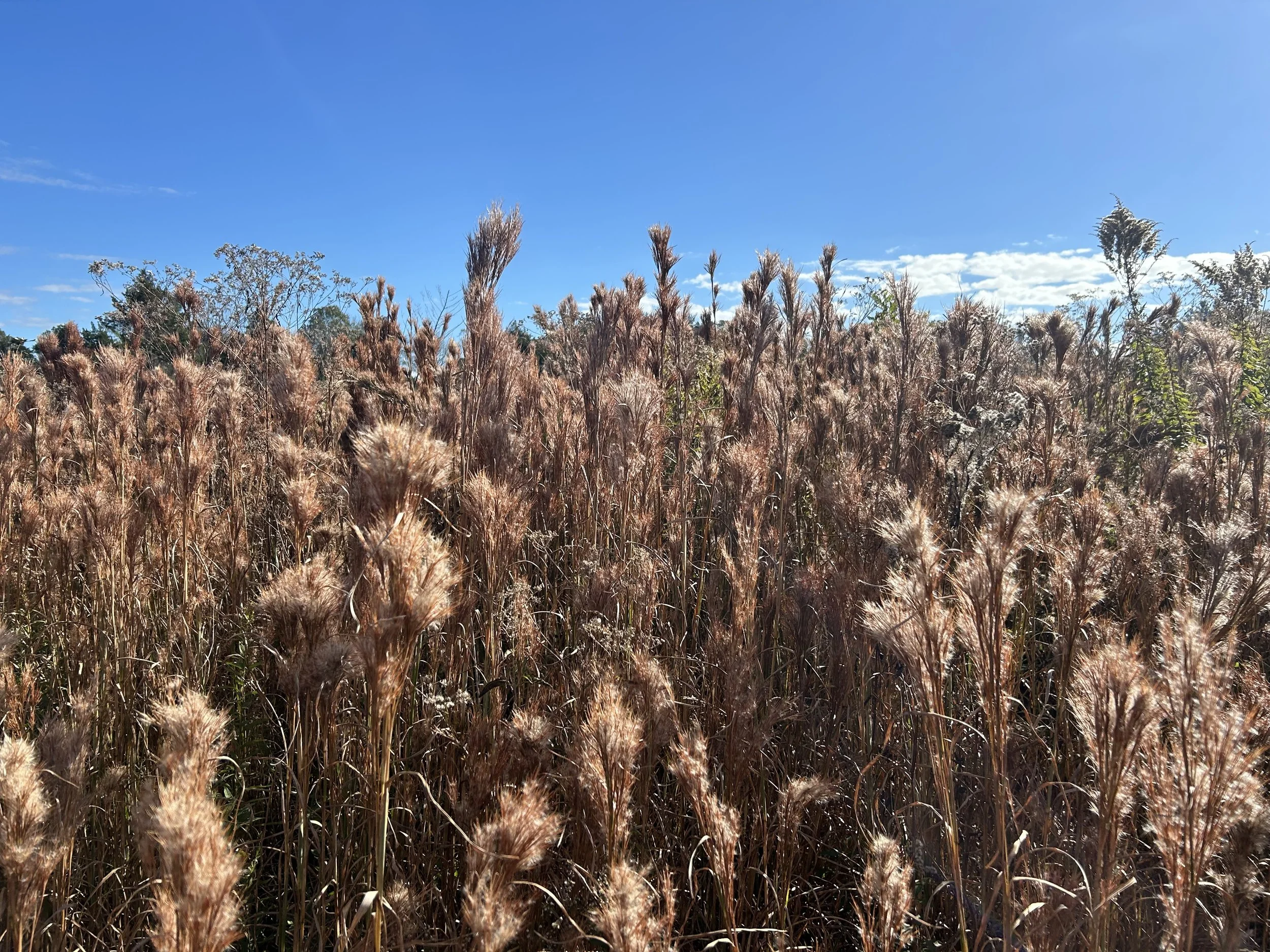
Explore an 11,000-acre working farm in Geiger, Alabama, co-owned by Hazel and Mitchell Bell, where excellent stewardship has preserved rare remnant Black Belt prairie alongside longleaf pine savanna restorations and mixed forests.
We’ll search cedar and hardwood groves for Indigo Bunting, Blue Grosbeak, and Summer Tanager, while restored savannas and prairie remnants may host Prairie Warbler, Northern Bobwhite, Orchard Oriole, and Yellow-breasted Chat. With luck, we may also encounter regional specialties like Painted Bunting, Scissor-tailed Flycatcher, and Dickcissel.
16 Spots // $45.00 - (Included in Sumter Farm Stay Package)
Address: 100 Meadow Lane, Geiger, AL 35459
-
Visit Alabama’s first capital and most famous ghost town, Old Cahawba. Situated between the Cahaba and Alabama Rivers and formerly inhabited by Mississippian Indian tribes, the once prominent town was abandoned shortly after the American Civil War. Birds we hope to see and hear on this guided hike through the ruins and bottomland forest include Orchard Oriole, Blue Grosbeak, Wood Thrush, various warblers and vireos, Summer Tanager, Broad-winged Hawk, Indigo Bunting, Acadian Flycatcher, an Blue-gray Gnatcatcher. Entrance fee included in price.
20 Spots // $40.00Address: 9518 Cahaba Rd, Orrville, AL 36767
Saturday August 1,
Midday & Evening Events
Click + to read event descriptions
-
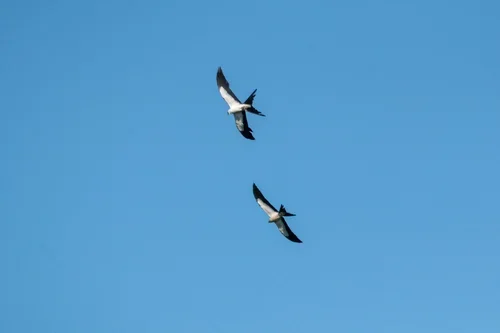
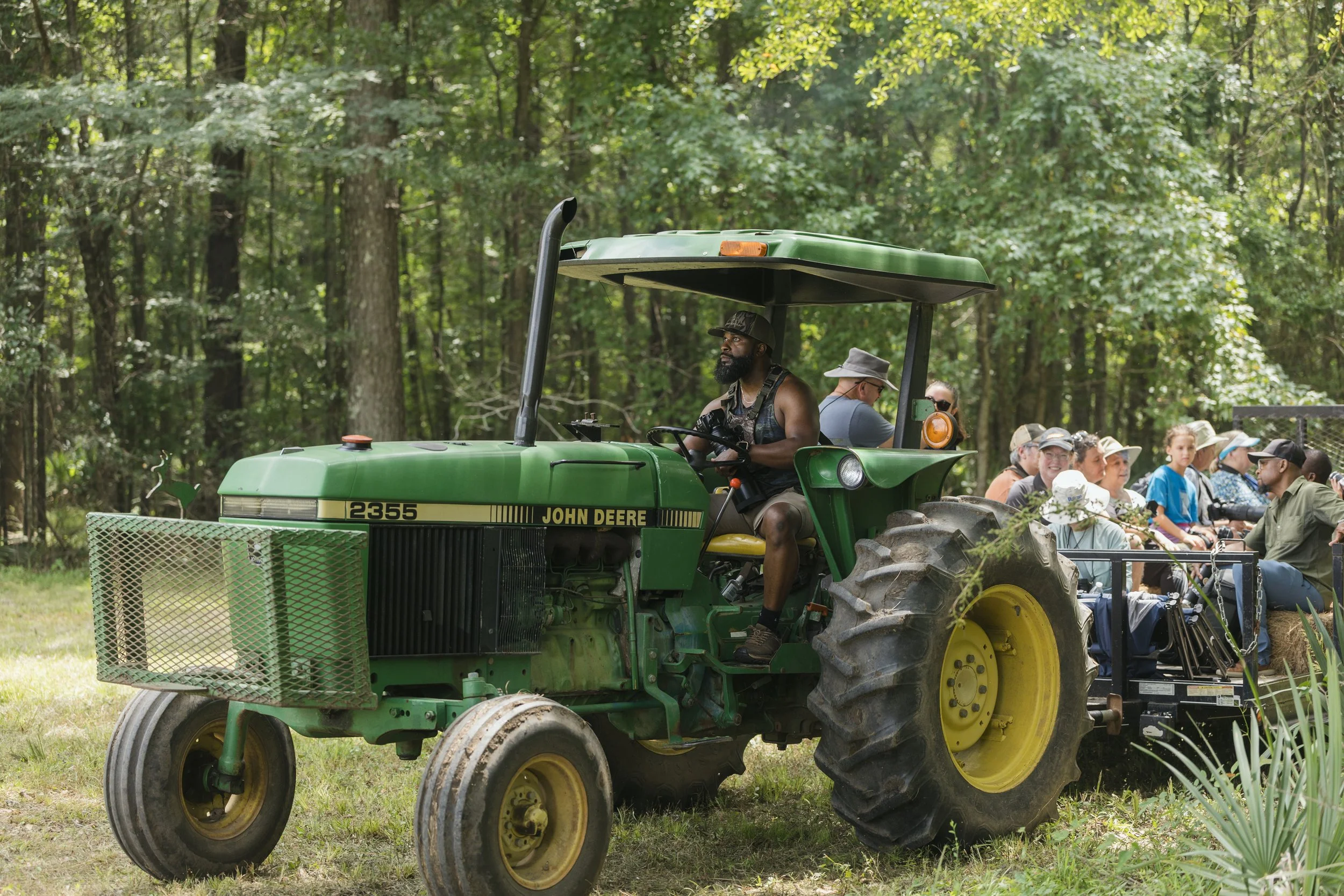
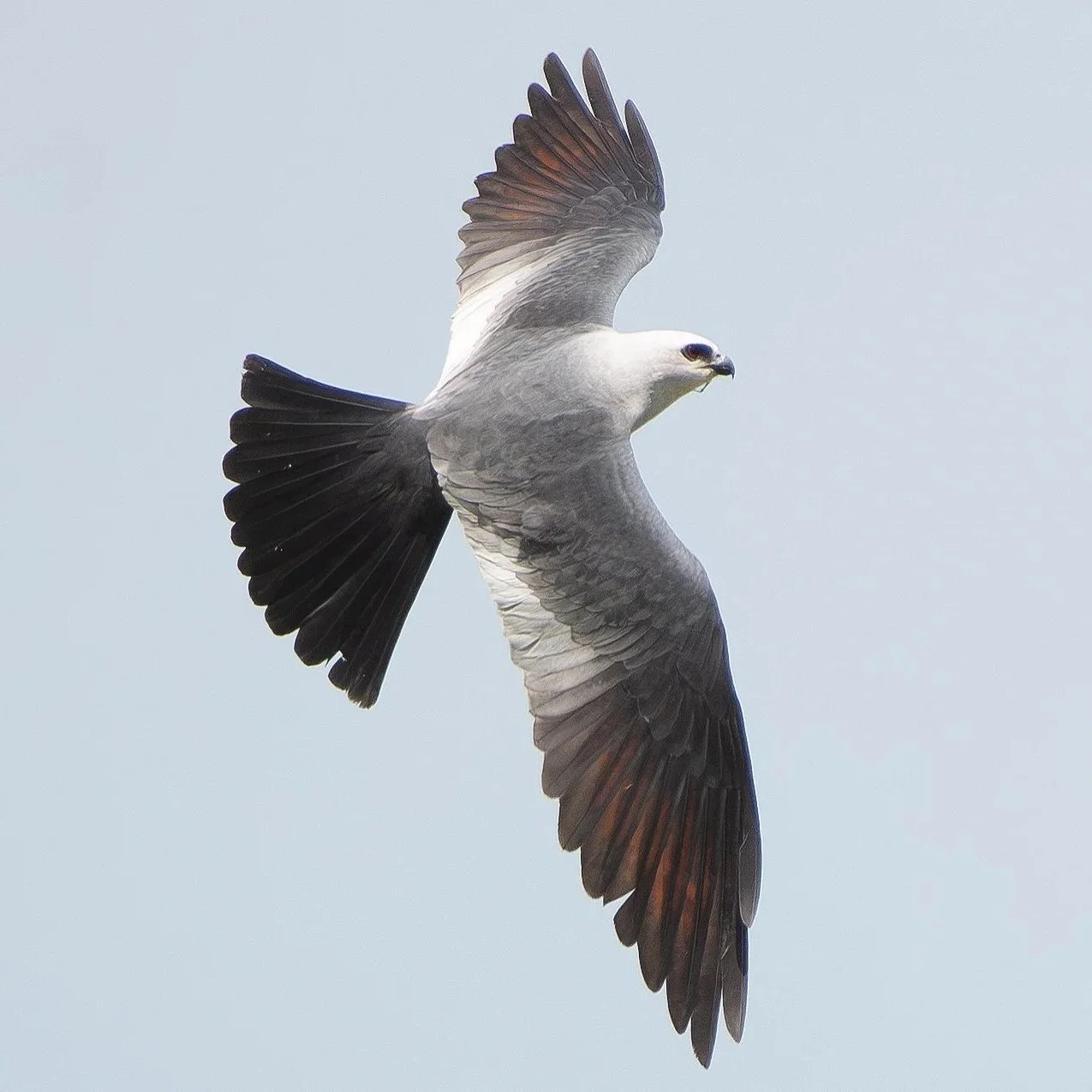
Spend a few hours as guests of the Joe family on their multi-generational Black Angus cattle farm in Newbern. As hay is harvested, we’ll watch for spectacular aerial displays from Swallow-tailed Kite and Mississippi Kite swooping low to catch insects stirred up by the tractor.
While waiting for the action, enjoy birding nearby hedgerows and bottomland forest and learning how the Joe family is using ecotourism to support conservation in the Black Belt. The farm has been featured on Extraordinary Birder with Christian Cooper and in publications including The Bitter Southerner.
Terrain/Amenities: Transportation provided by tractor-trailer or golf cart; porta-toilets available. Guests are encouraged to bring a chair, water, and snacks.
120 Spots // $40.00
Address: 1965 County Rd. 57 Newbern, AL 36765
-
Meet the staff of the Alabama Wildlife Center and their bird ambassadors - live owls, hawks, kites, and falcons - and maybe even a vulture! AWC is Alabama’s oldest and largest wildlife rehabilitation facility and cares for almost two thousand wild bird patients each year. The magnificent birds you will meet face-to-face have injuries preventing them from re-entering the wild, so they are used in education to heighten appreciation of Alabama’s native wildlife.
50 Spots / $25.00Address: 1217 Main Street, Greensboro, AL 36744
-
We are honored to announce that Nate Swick will be the keynote speaker for the Black Belt Birding Festival 2026!
Nate is the Education & Digital Content Coordinator for the American Birding Association (ABA) and the host of the popular American Birding Podcast, which airs every Thursday and features in-depth conversations with birding experts, rare bird roundups, and the latest association news.
He is the author of A Beginner’s Guide to Birding and the ABA Field Guide to Birds of the Carolinas. Nate also serves on the North Carolina Bird Records Committee, previously as chair, and works as an eBird reviewer for the state. Based in Greensboro, North Carolina, he and his family are perfectly positioned between the biologically rich southern Appalachian Mountains and the world-renowned pelagic birding of the Outer Banks.
Festival attendees can look forward to Nate’s keynote address and insights drawn from his extensive experience in birding, education, and conservation.110 Spots // $20.00
Address: 1217 Main Street, Greensboro, AL 36744
-
The Weissinger Lakes is an eBird hotspot known for rolling hills of hayfields, large aquaculture ponds, and Bald Eagles attracted to the area due to the abundance of catfish in the ponds. While there is no guarantee that we’ll see eagles, there’s a good chance we’ll encounter them here while we bird along the sideroads criss-crossing this location. Expect to see herons, egrets, cormorants, pelicans, kettles of vultures, and maybe a few ducks. Adjacent hayfields provide habitat for meadowlarks, Dickcissals, and other grassland specialties. If you have a spotting scope, bring it along for scanning distant ponds and soaring raptors.
Terrain/Amenities: Stops will involve minimal walking near parked cars on gravel and paved roads, with variably even/uneven textures. Bathrooms unavailable.
12 Spots // $35.00
Address: 11826 SR-5, Dallas County
-
Bird with us at one of the most impressive and impactful dams in Alabama. Located just a few miles northwest of Camden, the Miller’s Ferry Dam is one of three dams on the Alabama River. The reservoir created by this dam on the Alabama River provides open-water habitat, while the margins of the reservoir provides foraging habitat for waders - of which we may see up to six species. Adjacent areas provide meadow and woodland habitats for summer breeding species.
Terrain/Amenities: Mostly level terrain, mixture of paved and grassy paths around buildings, and gravel road in wooded areas.
16 Spots // $35.00
-
Tucked away to the southeast of Eutaw on the banks of the Black Warrior River is West Damsite Park in Greene County. This seldom birded eBird hotspot is a public use area on the western shore of the A.I. Seldon Dam. The park provides an opportunity to bird the floodplains and inlets of the river, where we will likely hear (and hopefully see!) Summer Tanagers and Prothonotary and Black-and-white Warblers. Other neotropical breeders frequenting these habitats include a variety of flycatchers, vireos, orioles, and buntings.
Terrain/Amenities: Gravel and dirt trails; paved parking lot overlooking the river. Bathrooms not available.
16 Spots // $35.00
Address: SE of Eutaw at Seldon Dam
-
The threatened Red-cockaded Woodpecker is found only in a few pockets of the region’s remaining Longleaf Pine forests including here at Payne Lake Recreation Area in the Talladega National Forest. With your guideyou will gather near the nesting trees of the woodpeckers and await their return to roost for the night. While waiting, we’ll learn from experts about the biology of the species and about the role that fire plays in maintaining these unique and threatened ecosystems. We’ll also see other species typical of the Longleaf Pine forest, possibly including Red-eyed and Yellow-throated Vireo, Summer Tanager, Yellow-breasted Chat, Brown-headed Nuthatch, and Red-headed Woodpecker. If the woodpeckers return to the roost early, this excursion will not last the full three hours. Note: a day-use fee of $3 (cash only; bring exact change) is required for admission.
Terrain/Amenities: Expect to walk 0.25 mi on pavement, mowed grass, and - optionally - uneven terrain on and off trail. Bathrooms available.
25 Spots // $35.00
Address: 581 Co Rd 71, Moundville, AL 35474
-
Owls live all around us, but are masters at hiding in plain sight! Join us at dusk for a walk in search of the amazing nocturnal predators that call the Black Belt home. Possibilities include Barred and Great Horned Owls, and Eastern Screech-owls.
25 Spots // $35.00 (Included in the Sumter Farm Stay Package)
Address: 100 Meadow Lane, Geiger, AL 35459
-
Black Belt nights on the prairie are lively. As the sun goes down and temperatures cool, the night party begins. Katydids and crickets fill the thick night air with their buzzy tunes, owls and nightjars chime in with their haunting songs, and moths - dozens to hundreds of species - take flight in their search for nectar and love. Join us on a night quest to hear - and possibly see - owls and nightjars of the prairie. Possibilities include Chuck-will’s-widow, Barred and Great Horned Owls, and Eastern Screech-owls.
25 Spots // $35.00
Address: 585 Millwood Rd, Greensboro, AL 36744
-
Join ALAudubon board member and Physicist Michelle Wooten for a stargazing adventure at the rural homestead called Contentment in Greensboro. We will begin by discussing principles of responsible outdoor lighting that supports bird migration, in addition to human and environmental health. Participants will learn how to use a star map to find constellations - including bird constellations! If conditions permit, we will look through a telescope at celestial objects like star clusters and nebulae.
Terrain/Amenities: Mostly level grassy homesite with plantings and mature trees.
16 Spots / $35.00
Address: 585 Millwood Rd, Greensboro, AL 36744
Sunday August 2nd
Morning events
Click + to read event descriptions
-
One of the birdiest sites in the Black Belt, this site offers a mix of wetlands, prairie, and forest. Species we may see on this guided tour include Wood Stork, Anhinga, Blue-winged Teal, White Ibis, several heron and egret species, Indigo and Painted Buntings, Blue Grosbeaks, Common Gallinules, American Kestrel (southeastern race), Eastern Kingbird, Loggerhead Shrike, Yellow Warbler, and Dickcissel. This is the best location for an unexpected species including early migrant shorebirds, ducks, and terns. This tour will explore the eastern portions of this expansive property.
Terrain/Amenities: Driving on gravel/dirt roads; walking on gravel and dirt roads, and uneven terrain in mowed fields. Bathrooms available.
12 Spots// $45.00
Address: 1132 Co. Rd. 73, Greensboro, AL 36744
-
One of the birdiest sites in the Black Belt, this site offers a mix of wetlands, prairie, and forest. Species we may see on this guided tour include Wood Stork, Anhinga, Blue-winged Teal, White Ibis, several heron and egret species, Indigo and Painted Buntings, Blue Grosbeaks, Common Gallinules, American Kestrel (southeastern race), Eastern Kingbird, Loggerhead Shrike, Yellow Warbler, and Dickcissel. This is the best location for an unexpected species including early migrant shorebirds, ducks, and terns. This tour will explore the western portions of this expansive property.
Terrain/Amenities: Driving on gravel/dirt roads; walking on gravel and dirt roads, and uneven terrain in mowed fields. Bathrooms available.
12 Spots // $45.00
Address: 1132 Co. Rd. 73, Greensboro, AL 36744
-
Visit Alabama’s first capital and most famous ghost town, Old Cahawba. Situated between the Cahaba and Alabama Rivers and formerly inhabited by Mississippian Indian tribes, the once prominent town was abandoned shortly after the American Civil War. Birds we hope to see and hear on this guided hike through the ruins and bottomland forest include Orchard Oriole, Blue Grosbeak, Wood Thrush, various warblers and vireos, Summer Tanager, Broad-winged Hawk, Indigo Bunting, Acadian Flycatcher, an Blue-gray Gnatcatcher. Entrance fee included in price.
Terrain/Amenities: Walking up to 1 mile on paved and gravel roads, forest trails with roots, and boardwalk. Bathrooms available.
20 Spots // $40.00
Address: 9518 Cahaba Rd, Orrville, AL 36767
-
Enjoy a guided bird walk through this 11,000 acre farm in Geiger, Alabama, managed and co-owned by Mitchell and Hazel Bell. Possibilities include Indigo Buntings, Blue Grosbeaks, Dickcissels, Prairie Warbler, Orchard Oriole, Eastern Meadowlark, Field Sparrow, Loggerhead Shrike, and Eastern Kingbird. We will also admire the summer wildflowers and grasses that support Black Belt prairie birds, and the many pollinators and other insects upon which this unique ecosystem relies.
12 Spots // $50.00
Address: 100 Meadow Lane, Geiger, AL 35459
-
Red Bamberg road is a favorite among birders because it is lightly trafficked with tremendous habitat diversity including forest, creek bottom, catfish ponds, pasture and prairie. Likely grassland specialists include Eastern Meadowlark, Loggerhead Shrike, Dickcissal, Field Sparrow, Blue Grosbeak, and Indigo Bunting. This is also a known location for Painted Bunting - but no promises for this shy species. If swallow flocks are feeding here, we could see up to five species. Meanwhile the extensive catfish ponds of the area attract Bald Eagles, Turkey and Black Vultures, and other raptors.
12 Spots // $35.00
-
A unique park in the Black Belt, Spillway Falls lies below the Demopolis Lock and Dam, and features expansive rocky and shallow shoals viewable from a wide observation deck, and a forested trail offering an interesting mix of water and woodland species. Near the water, commonly seen are roosting Wood Storks, Anhingas, Great Blue Herons, Double-crested Cormorants, and possibly migrating shorebirds near smaller pools and puddles. Along the wooded trail, you might catch a glimpse of Northern Parulas, Yellow-throated Warblers, tanagers, and woodpeckers. The local family of otters may also make an appearance!
Terrain/Amenities: Paved sidewalks and parking area along the river. Dirt forest trail with roots and boardwalk. Bathrooms available.
16 Spots // $35.00
-
Halfway between Selma and Montgomery is the Robert Henry Lock and Dam. The public lands here provide access to the shores of the Alabama River, floodplain forest, meadows, and backwater wetlands. In the wetlands we’ll look for White Ibis, Wood Duck, Common Yellowthroat, Snowy Egrets, and other waders. In the forests we’ll seek neotropical breeders including Northern Parula and Blue-gray Gnatcatcher. We’ll also scan the river for any wandering waterbirds migrating downriver.
Terrain/Amenities: Flat terrain sloping down to the water’s edge; mixture of paved and dirt paths. Bathroom available.
16 Spots // $30.00
-
Join us on the National Historic Selma to Montgomery Civil Rights March Trail along Hwy 80, as we visit the David Hall Family Farm (campsite 1) used by foot soldiers en route to Alabama’s capital. We will meet with family members who still live on this land, and learn about the family’s involvement in the Civil Rights Movement and how they came to host over 300 marchers, 1,000 military policemen, and 2,000 Army troops during the course of the march - which eventually swelled to 25,000 marchers entering Montgomery on March 25, 1965. After hearing stories about the march, we’ll tour the farm to look for iconic birds of the Black Belt prairie, including buntings, flycatchers, eagles, shrikes, and meadowlarks.
16 Spots // $35.00 -
Join us and the Cahaba River Society for an exciting morning of birding by canoe at Perry Lakes Park. Enjoy paddling between a series of oxbow lakes while on the lookout for Bald Eagle, Wood Duck, Yellow-billed Cuckoo, Little Blue Heron, Northern Parula, Barred Owl, Red-eyed Vireo, and Summer Tanager. Oxbow lakes are past river channels that have been separated from the current channel through any number of sedimentation events. These lakes are areas that continue to hold water and can be reconnected with the river after flood events. These are oases of life for a vast array of insects, fish, birds, mammals, reptiles, and amphibians. Cahaba River Society will provide the canoes, but if you’d like to bring your own canoe or kayak, please let us know in advance.
Terrain/Amenities: Canoes provided by Cahaba River Coalition.
18 Spots // $45.00
Address: AL 175 Marion AL, 36756