
Sign up for Action Alerts to help protect Alabama’s birds!
Act Now
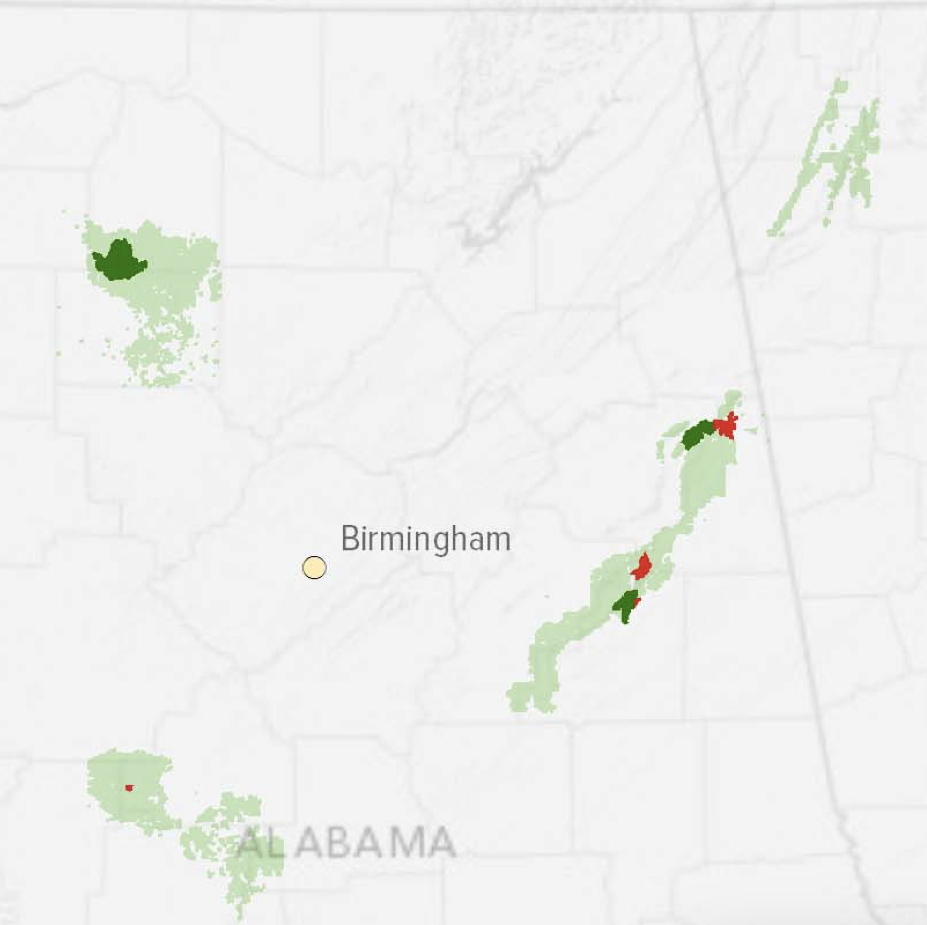
Southern Environmental Law Center// Roadless Rule Map
SUBMIT YOUR LETTER BEFORE OCTOBER 6, 2026
The Roadless Rule has protected 44.5 million acres of American National Forests for a quarter century. Now is our time to defend it.
On August 18, 2026 the Forest Service filed its Draft Environmental Impact Statement, and its Chosen Alternative is to rescind the Roadless Rule in its entirety — pitched as wildfire protection. The public has a window to respond until October 6, 2026 at midnight. The agency is legally required to address every substantive concern raised in the record. Please submit a comment in opposition to this rule change!
Instructions: Open the link below for the Federal Register, Special Areas; Roadless Area Conservation:
Copy the message below and paste it into the comment window. You are encouraged to add some of your own thoughts, because every unique message must be reviewed and tabulated. Under the comment window, you have the option to identify yourself or submit your comment anonymously.
Message suggested by Alabama Audubon:
I am writing to voice opposition to the proposed recission of the Roadless Area Conservation Rule. We urge the USDA Forest Service to adopt Alternative 1 and maintain this crucial conservation policy which protects National Forests, wildlife, habitats they require to live. I am strongly opposed to the Rule being entirely rescinded as proposed in Alternative 2 or severely weakened as in Alternative 3. For 25 years, the Roadless Area Conservation Rule has protected wildlife habitats across the United States. Due to the absence of roads, Roadless Areas have special ecological values that are essential for birds and other wildlife. Roadless Areas reduce risks of vehicle strikes, noise disturbance, and human caused wildfires. The Roadless Rule protects species that have large home range requirementsand are threatened by fragmentation of their habitats by roads. The Roadless Rule is a fundamental protection of Forest Service lands and represents one of the most significant conservation achievements since the establishment of the National Forest system.
While most of the Roadless Areas are west of the Mississippi River, there are many important areas in the eastern United States, particularly those near the Mississippi Bird Migration Flyway. Alabama has five tracts of roadless areas (12,803 acres), all within the Talladega National Forest. These areas provide habitat for many bird species including the Kentucky Warbler, Louisiana Waterthrush, Ovenbird, Chimney Swift, and Scarlet Tanager. Roadless Areas in the Talladega National Forest are critical for two species in particular. Cerulean Warblers prefer a habitat of mature, broad-leaved deciduous forests, but due to habitat loss the International Union for Conservation of Nature now lists the species as near threatened. The Red-cockaded Woodpecker relies on old growth Longleaf Pine forests for nesting. Although the woodpecker has recently been downgraded to threatened, its Longleaf Pine habitat remains imperiled.
Beyond their ecological importance, Roadless Areas provide important public benefits. They support birdwatching and other outdoor recreation that generate significant annual revenue and related jobs to rural communities across the US. Intact, large forest tracts save downstream communities millions of dollars in water filtration cost providing clean drinking water for an estimated 60 million Americans. Protecting Roadless Areas also helps reduce the risk of human-caused fires by limiting road access and associated ignitions. There is strong consensus within the scientific community that conserving Roadless Areas is crucial for protecting wildlife, clean water, and ecosystems.
I urge the USDA to adopt Alternative 1 and continue to protect Roadless Areas. Thank you for your time and consideration.
July 17, 2026
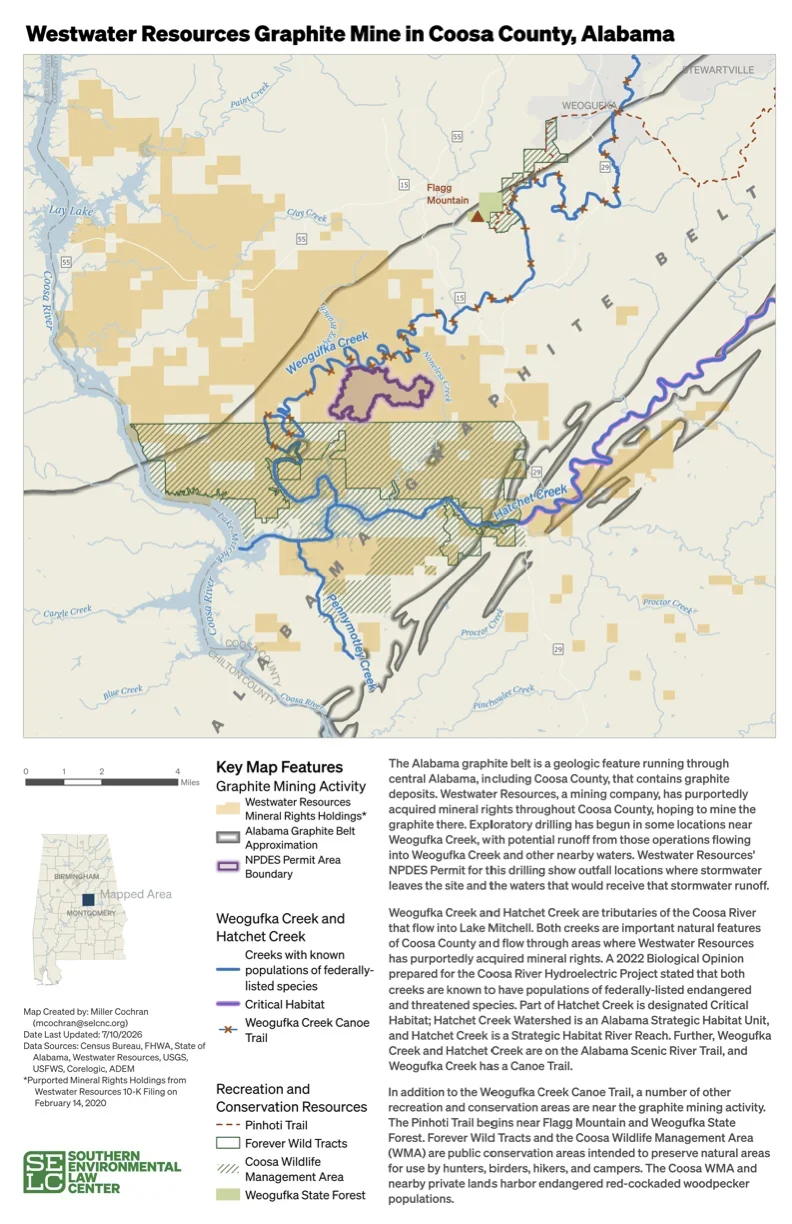
Act Now to Protect the Coosa WMA and Threatened Wildlife from a Massive Proposed Graphite Mine! A massive open-pit graphite mine has been proposed for more than 1,100 acres in Coosa County—and federal officials need to hear from you before July 26, 2026. If approved, this project would permanently transform one of Alabama’s most ecologically significant forested landscapes into an industrial mining operation, threatening the nearby Coosa Wildlife Management Area, numerous threatened and endangered aquatic species, two of Alabama’s most beautiful creeks—Hatchet Creek and Weogufka Creek—and cherished public lands enjoyed for hunting, fishing, canoeing, hiking, and birding. This proposal deserves a thorough environmental review before any permits are issued.
More information—including where to submit comments and learn about upcoming community meetings—is available here on Coosa Riverkeeper’s website.
May 28, 2026
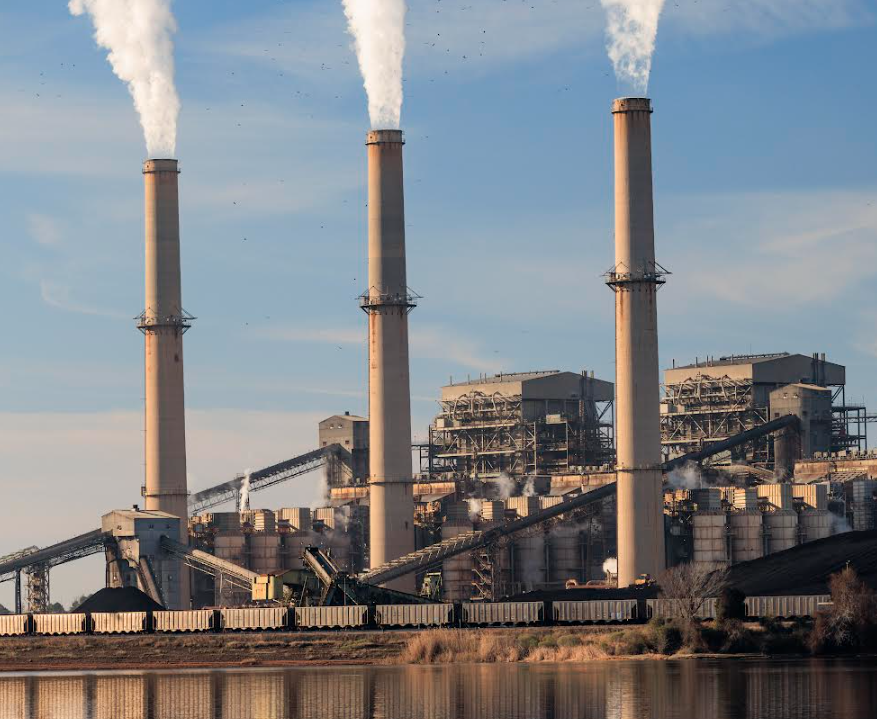
The Environmental Protection Agency is proposing dangerous rollbacks to regulations on coal ash storage pits. Across Alabama, there are more than 117 million tons of toxic coal ash in unlined pits next to our waterways at nine different sites with more than 50 groundwater violations. The proposed changes would weaken current safeguards and put Alabama’s rivers in greater danger of hazardous pollutants like arsenic, mercury, and lead. Coal ash pits threaten drinking water, public health, and Alabama’s wildlife.
Please follow the link below to submit a public comment to the EPA through the Sierra Club Action page. Urge EPA Administrator Zeldin to reject these harmful rollbacks and protect Alabama’s precious rivers from toxic coal ash pollution. Send a message here.
April 22, 2026
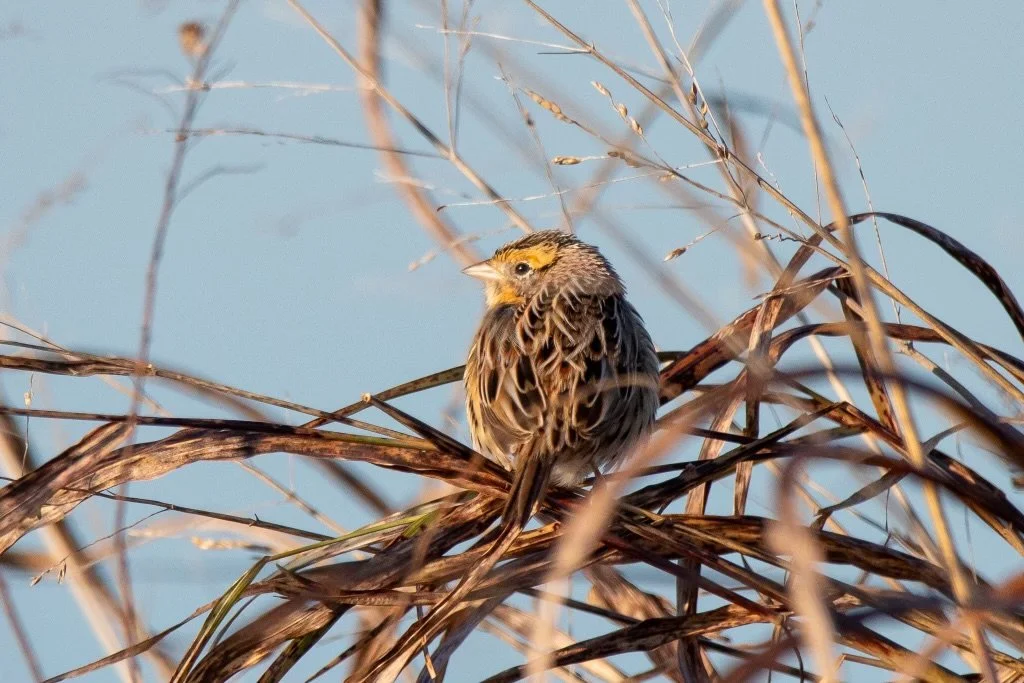
During the last week of April, Congress will be voting on the next Farm Bill. The Farm Bill is the nation’s largest source of funding for conservation on private lands—and itplays a critical role in turning the tide for declining grassland and forest bird species. It works by incentivizing farmers to allow some of their land to lay fallow (just like in the “old days”) which provides habitat for birds. Many of these species overwinter in Alabama or migrate through the state. The Farm Bill represents our country's single largest investment in conservation on private lands, and can help reverse the alarming decline of grassland and forest birds. Ask your members of Congress to pass a Farm Bill.
April 22, 2026
Take action for seabirds and shorebirds
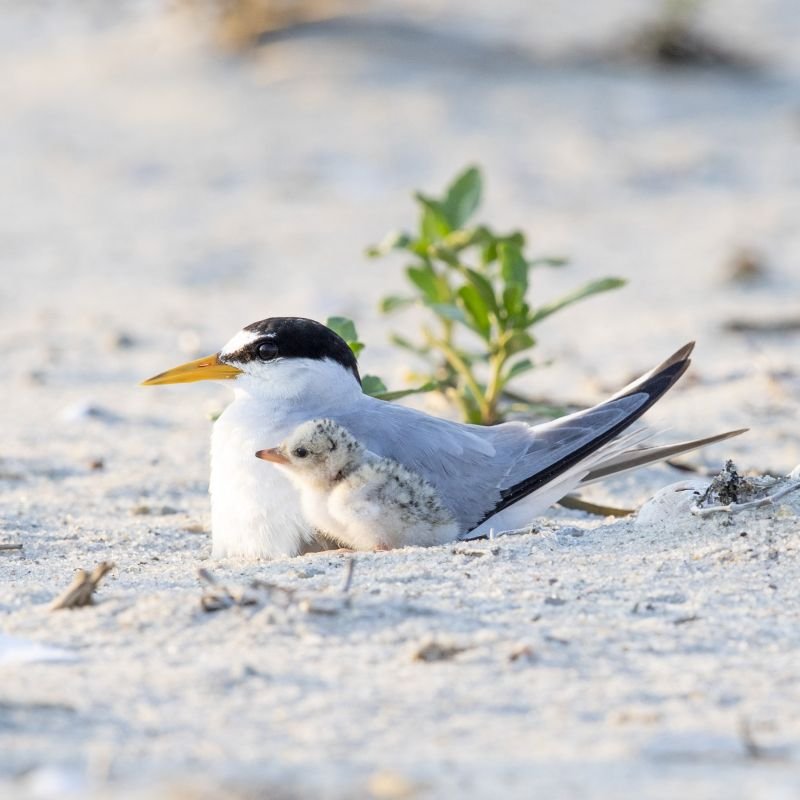
Estuaries—where rivers meet the sea—are essential habitat for shorebirds and seabirds, providing nesting areas and critical stopovers during migration. These places don’t just support birds—they also strengthen coastal communities. The U.S. Environmental Protection Agency’s National Estuary Program has been a cornerstone of this work for decades, supporting locally driven restoration efforts across the country. Along the Alabama coast, this program has delivered tremendous benefits through the Mobile Bay National Estuary Program, improving habitat for birds while supporting water quality, fisheries, and local economies. Now, this successful, bipartisan program is at risk of expiring.
Congress has the opportunity to reauthorize and strengthen it through the ESTUARIES Act. Use this action alert from the National Audubon Society to contact your U.S. Senators and urge them to support the National Estuary Program—protecting vital coastal habitats and the birds and communities that depend on them.
April 20, 2026
Endangered Species Act Action Alert
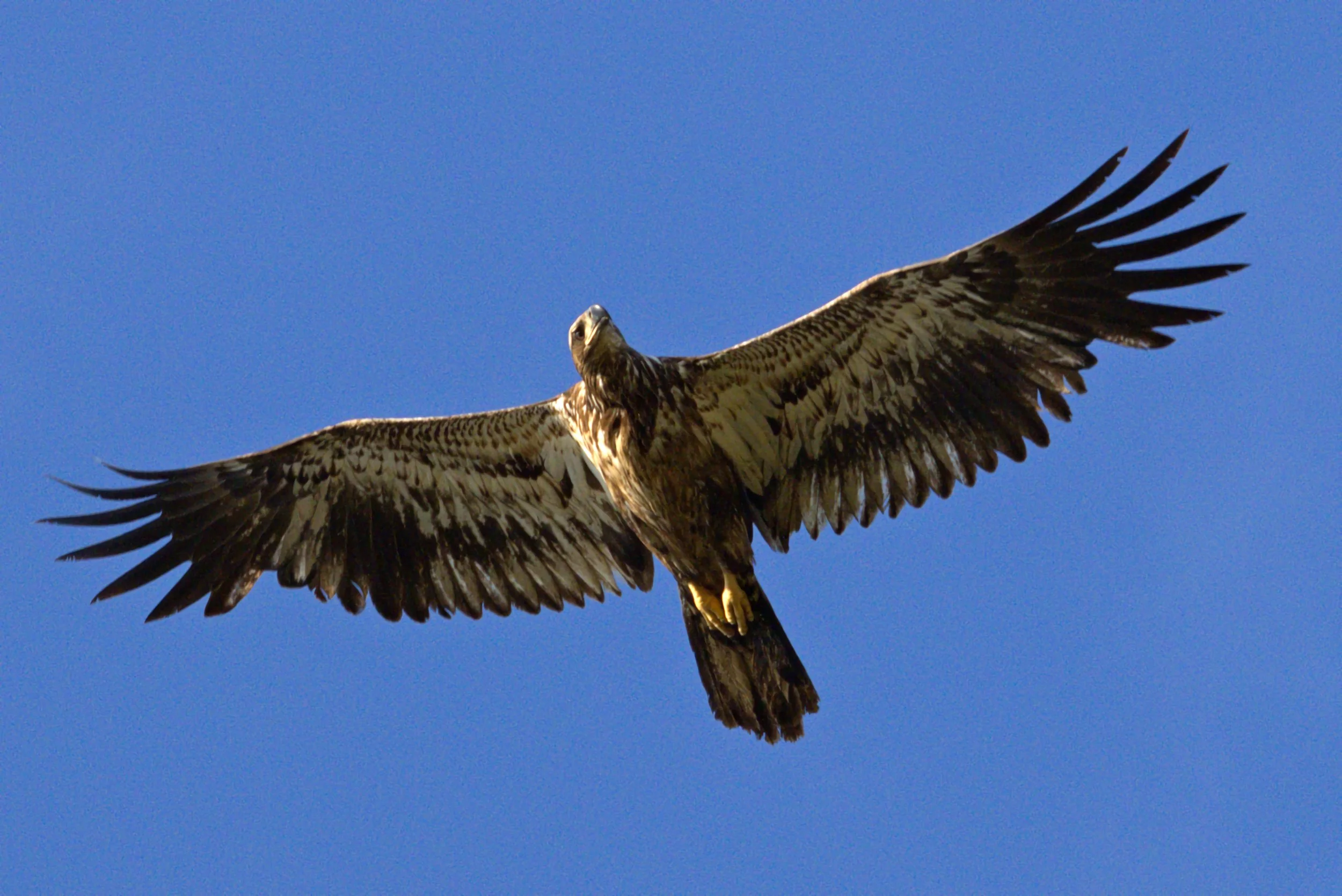
A vote is imminent in the U.S. House of Representatives on H.R. 1897, a proposal that would significantly alter—and weaken—the Endangered Species Act (ESA). If you care about wildlife conservation, now is the time to speak up and urge your Representative to oppose this bill. The bill proposes to scale back the review process for federal projects, making it easier for development to proceed without fully accounting for impacts on endangered species. It would also speed up delisting decisions while making it harder to add new species, weaken permit oversight, and expand exemptions that allow harm to protected wildlife under certain conditions.
These changes could have real consequences for vulnerable species, including the Whooping Crane, Florida Scrub-Jay, and Eastern Black Rail, among others.
The ESA remains one of the most effective and broadly supported environmental laws in the country. Let your Representative know that weakening it is not acceptable using this ESA action alert at the American Bird Conservancy.
April 1, 2026
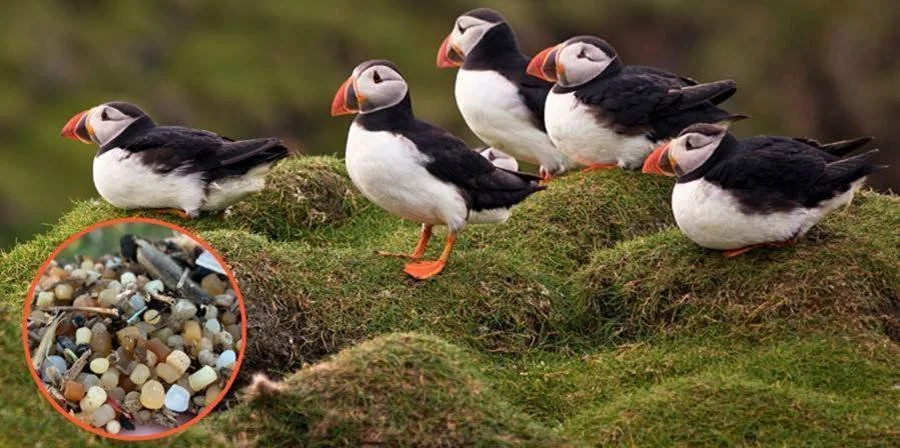
Plastic Pellet Free Waters Act Introduced
Congress is considering the Plastic Pellet Free Waters Act, which would establish a federal standard that protects birds and people across the country from the dangerous consequences of plastic pellets.
Barbara J. Baird/Audubon Photography Awards
March 11, 2026
Senate Bill 71 has been referred to the floor of the Alabama State Senate. This bill will prohibit state agencies from creating standards for toxic chemicals in Alabama rivers such as Forever Chemicals (PFAS) and require Alabama to follow Federal standards.
This bill will allow Washington D.C. to dictate what is best for Alabama and the health of our families. This bill will restrict state environmental agencies from adopting regulations stricter than federal standards. This bill will increase the cost of treating drinking water. If ADEM can’t regulate harmful chemicals, water utilities and customers will have to pay the price of cleaning up our drinking water.
This bill creates a costly, insurmountable burden for state agencies to create standards for toxic substances. The bill forces state agencies that have limited resources to show “a directcausal link” to bodily harm in order to protect citizens and prohibits standards based on “increased risk of disease.” All public health science is based on risk assessment.
This bill would tie the hands of state agencies such as the Alabama Department of Health from issuing health advisories on water contamination. The bill will require state agencies to wait until people or animals are dying or sick from toxic exposure before they are allowed to adopt rules about dangerous chemicals or substances.
Follow this link to the Alabama Rivers Alliance page.
Urge your Alabama Senator to VOTE NO on Unsound Science Bill SB 71

December 4, 2025
The Gulf Coast Ecosystem Restoration Council—one of the entities tasked with restoring the Gulf since the Deepwater Horizon oil spill—is proposing a series of projects to comprehensively restore the region’s wildlife and habitats.
We at Alabama Audubon are especially supportive of the proposed project on Dauphin Island, which mesh with our ongoing work to improve nesting habitat for snowy plovers, American oystercatchers, least terns, and Wilson’s plovers.

September 29, 2025
The survival of Greater Sage-Grouse is deeply tied to the availability of healthy sagebrush habitat. A recent report found that 1.3 million acres of functioning sagebrush habitat are lost every year across the West.
September 12, 2025
Roadless areas are undeveloped portions of national forests managed by the U.S. Forest Service. There are nearly 58 million acres of roadless areas—accounting for about 2% of the land area of the United States—places currently largely protected from road development and industrial logging.
But now the U.S. Forest Service is planning to repeal the Roadless Rule.
Thank you for taking action- Protect birds, human, and environmental health by filling out this form and letting your voice be heard.

September 3, 2025
The EPA is proposing to overturn a landmark scientific finding, increasing risks to birds, human health, and the environments we share.
The EPA is accepting public input on the proposal to eliminate the Endangerment Finding until Monday, September 22.
Thank you for taking action- Protect birds, human, and environmental health by filling out this form and letting your voice be heard.